
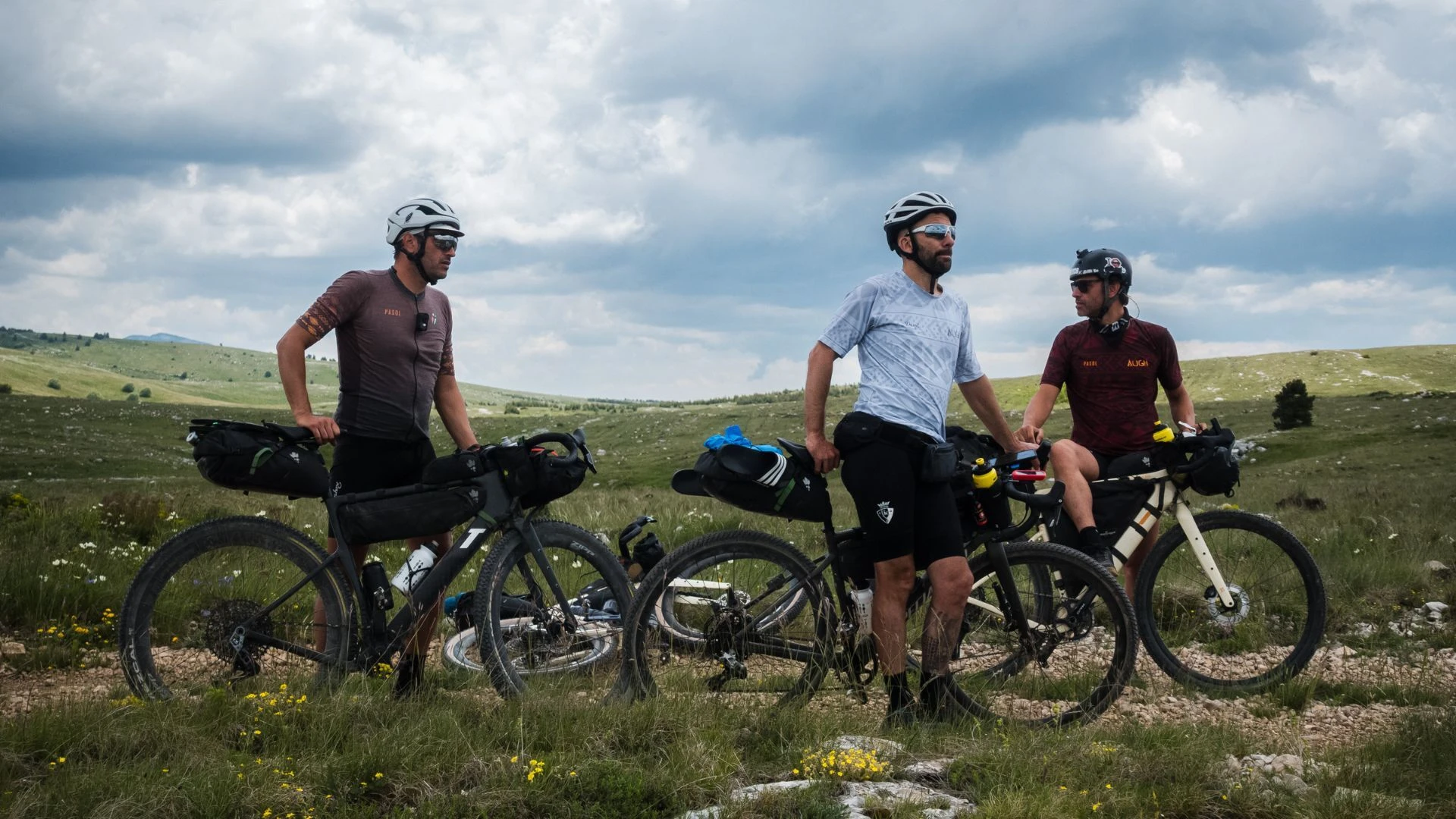
It’s early morning in Split. A timid Croatian sun warms our backsides as we bustle around on the harbor quay—tighten this, tighten that, where did I put my Garmin, did anyone bring sunscreen, and so on—getting our bikes road-ready again, as the god of bikepacking commands. The last cars are still rolling out from the belly of the ferry amid the shouts of dockworkers.
Big ferries are the ultimate way to travel with a bike: you leave in the evening, sleep in a cabin, and wake up the next morning fresh as a daisy—or almost, provided you didn’t overdo it with the drinks. You board last and leave first from the cargo deck, and your bike sleeps soundly, gently rocked by the waves. No steel frames built to survive the trauma of airline handling this time; we’re bringing along our trusty—and rather delicate—carbon gravel bikes, faithful companions through a thousand (mis)adventures.
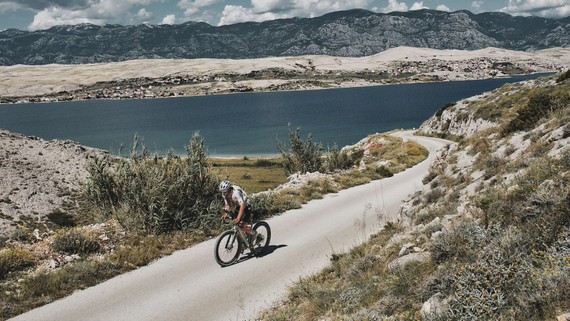
The mission: complete, in five days, a 500-kilometer loop with 7,700 meters of elevation gain, straddling Croatia and Bosnia, partly following the rugged and remote tracks of the Trans Balkan Race.
We weave our way through city traffic to reach the Roman ruins in the center of town, snap a few photos, do a little sightseeing—the bare minimum, really, given our usual impatience to leave civilization behind and start cursing our way up some brutal gravel climb, drenched in sweat. Split, under this spring sunshine, is an absolute gem. We’d gladly stay longer, but the road is already tilting upward, steepening fast, and those beautiful sun-soaked beaches soon become a distant memory.
Our first night is spent in Imotski, a sleepy little town near the Bosnian border. Early the next morning we take time to visit the stunning karst lake just outside town—the famous Modro Jezero, or Blue Lake to its friends—where a delicate and highly complex rescue operation will later be launched to recover an action camera that somehow ended up at the bottom of the lake. Then it’s full speed ahead toward magical Mostar, passing through Međugorje and, not least, crossing the border from the EU into non-EU territory.
After a long and rather dramatic battle against a relentless headwind along the Ćiro Trail—a cycling route built on the path of a former railway, from which, between us, we had expected considerably more—we finally find ourselves knocking back beers and devouring mountains of ćevapčići, the delicious Balkan grilled sausages, not far from Mostar’s iconic bridge. Destroyed during the war and rebuilt in 2004, the bridge still attracts the occasional tourist brave—or drunk—enough to dive into the Neretva River after a dizzying 24-meter drop.
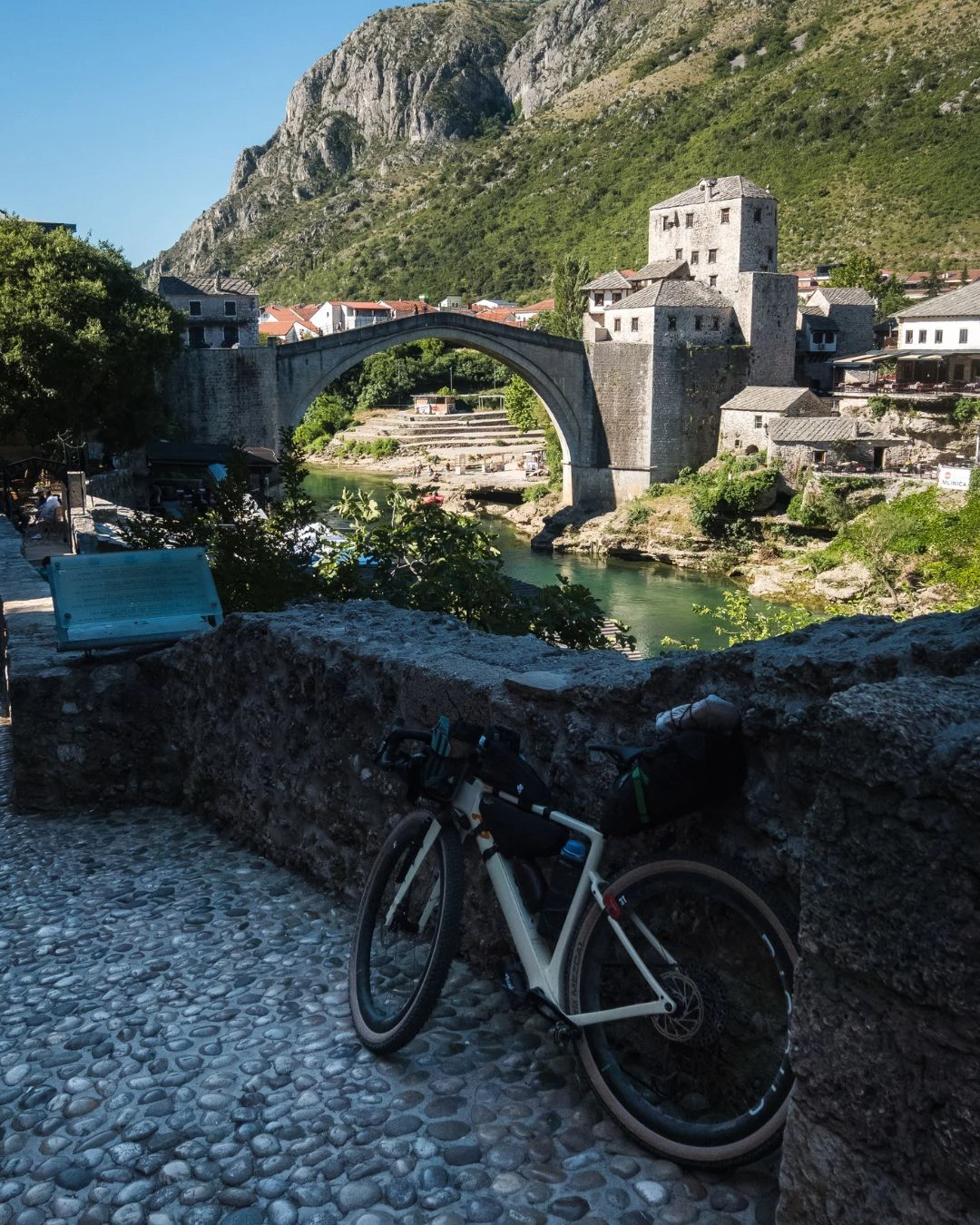
Near an ancient mosque, we stop to chat with Ibrahim, the caretaker. He kindly invites us inside, but we have to decline; a tough day lies ahead. We ask him what it was like to remain in the city during the war, throughout the terrible siege that began in 1993 and ended the following year. A chill runs down our spines when he replies, bluntly: “God only knows.”
One last glance at the Stari Most, and our wheels point toward the wildest section of the loop: Blidinje Nature Park, a high plateau sculpted by rugged mountains, alpine forests, lakes, and vast, primordial landscapes. By pure chance, the leading riders of the Trans Balkan Race—one of the toughest ultracycling events in the world, which we’re effectively riding in reverse—come flying toward us at unbelievable speeds as they devour mile after mile of these desolate lands.
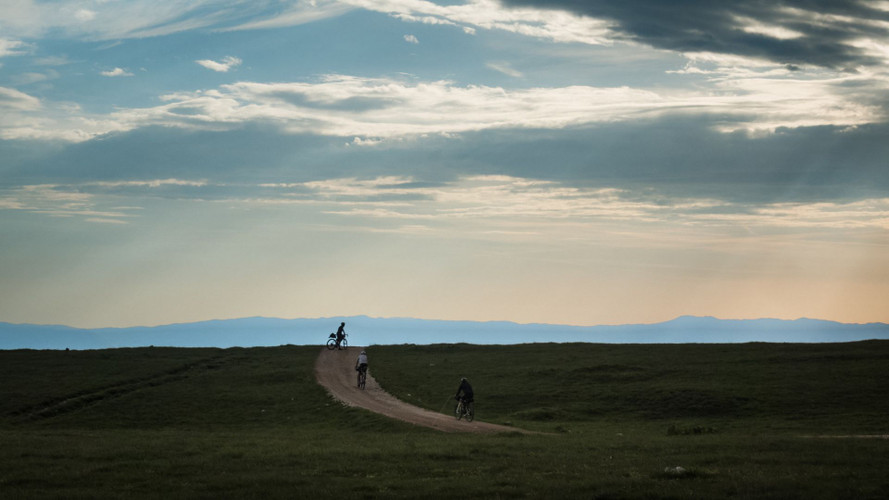
We humble bikepackers, with far more modest ambitions, continue on toward Livno. Before reaching town, we cross a plateau inhabited by wild horses: endless pastures, horizons that seem to stretch forever, and countless kilometers of gravel roads to ride in near-religious silence. It is, without question, the highlight of the entire journey—that rare feeling that repays every ounce of effort and leaves an unforgettable mark on your heart.
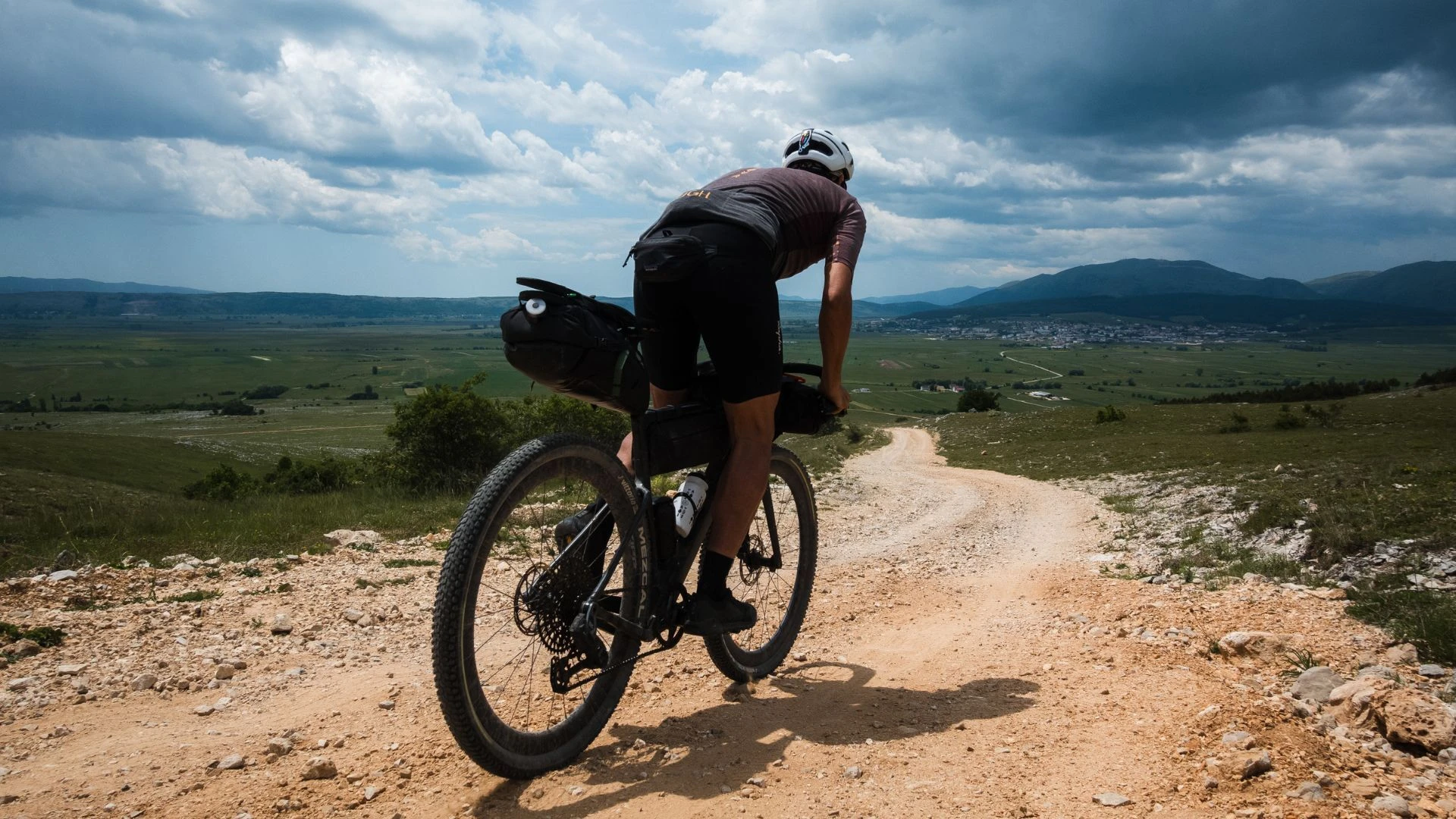
The journey back westward, toward Croatia, has now begun. A sudden downpour catches us off guard, but the merciful gods of bikepacking provide salvation in the form of an abandoned house with a pergola, offering shelter from the storm. Joining our cheerful little gathering is a remarkably friendly—and equally soaked—stray dog. Before long, she decides to trot alongside us for several kilometers despite our repeated pleas for her to turn back.
After crossing a demanding mountain pass toward Sinj, we launch into an endless descent on smooth tarmac, where a few particularly fearless gravel riders push well beyond 80 km/h. Waiting for us at the bottom is a small, ramshackle container with a border officer inside and, yes, once again the Tribe has made it back into good old Europe and is finally heading home.
Five hundred kilometers and nearly 8,000 meters of climbing across asphalt, gravel and forgotten tracks: for a ride like this, the Umbria Bikepacking collective chose the Selle San Marco Shortfit Allroad, the saddle made for riders who don’t want to choose between road and off-road. Curious about how it’s built and why we designed it for gravel and adventure? Read our launch article